
In the summer of 1981, as the Finnish National Board of Health removed homosexuality from the official classification of diseases, the lesbians and gays of Finland experienced an overnight miracle recovery. However, a large part of the general public still viewed homosexuality as a “deviance” or “disorder”. Homosexual acts had been decriminalised ten years earlier, but at the same time, a new act prohibiting people from “encouraging others to commit homosexual acts” was introduced. The act also specified a higher age of consent for homosexual relationships. The act prohibiting public encouragement of homosexual acts remained in force until 1999. It especially affected the way Finnish media handled the subject of sexual minorities, since there was no clear-cut criteria for what could be considered “public encouragement”. On the other hand, the law also provided the media with a handy excuse to keep quiet about the issue, which was seen as very controversial. No person was ever sentenced for breaking the act. At long last, the Finnish Institute for Health and Welfare chose to remove transvestism, fetishism, sadism and masochism from the Finnish disease classification in 2011.
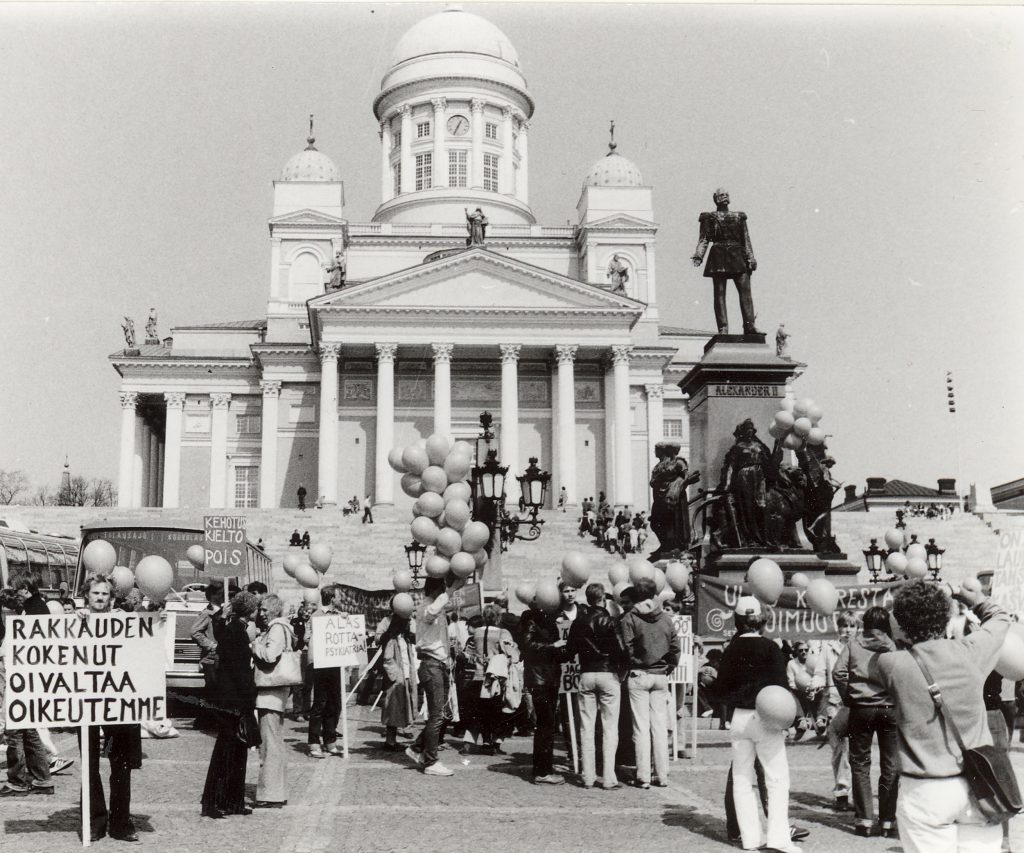
A demonstration at SETA’s Liberation Day event at the Senate Square in Helsinki, May 1981. The demonstrators are holding up signs with slogans such as “REPEAL THE UNJUST LAW” and “DOWN WITH RAT PSYCHIATRY!”. Picture: Hannu Vierula, The Finnish Labour Museum Werstas.
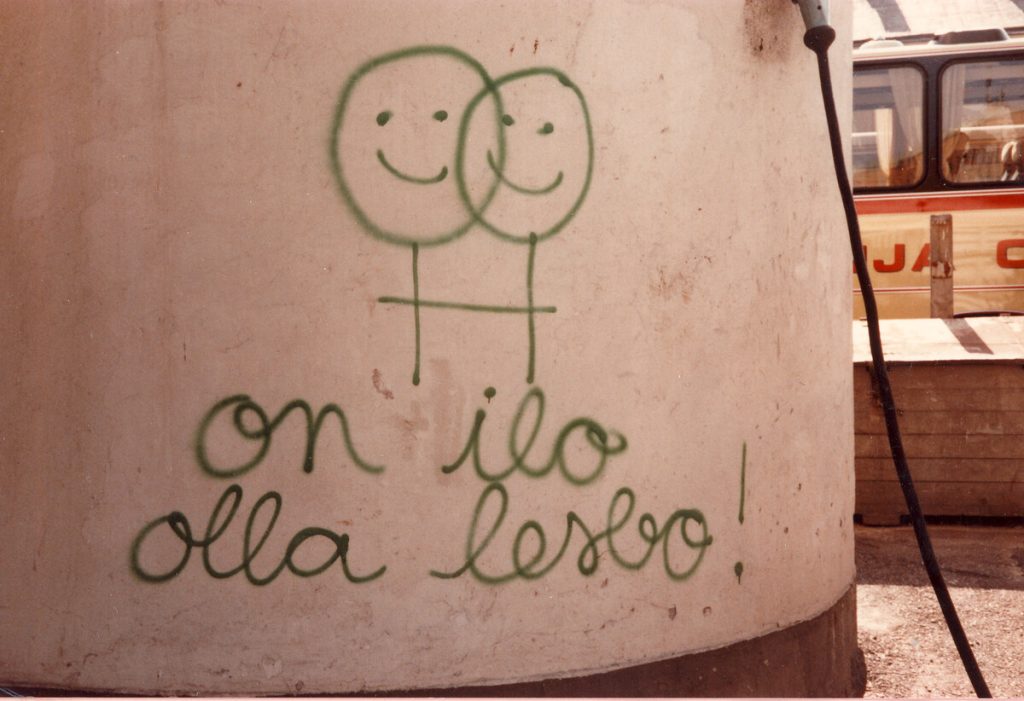
Picture: Auli Kaartinen, The Finnish Labour Museum Werstas